
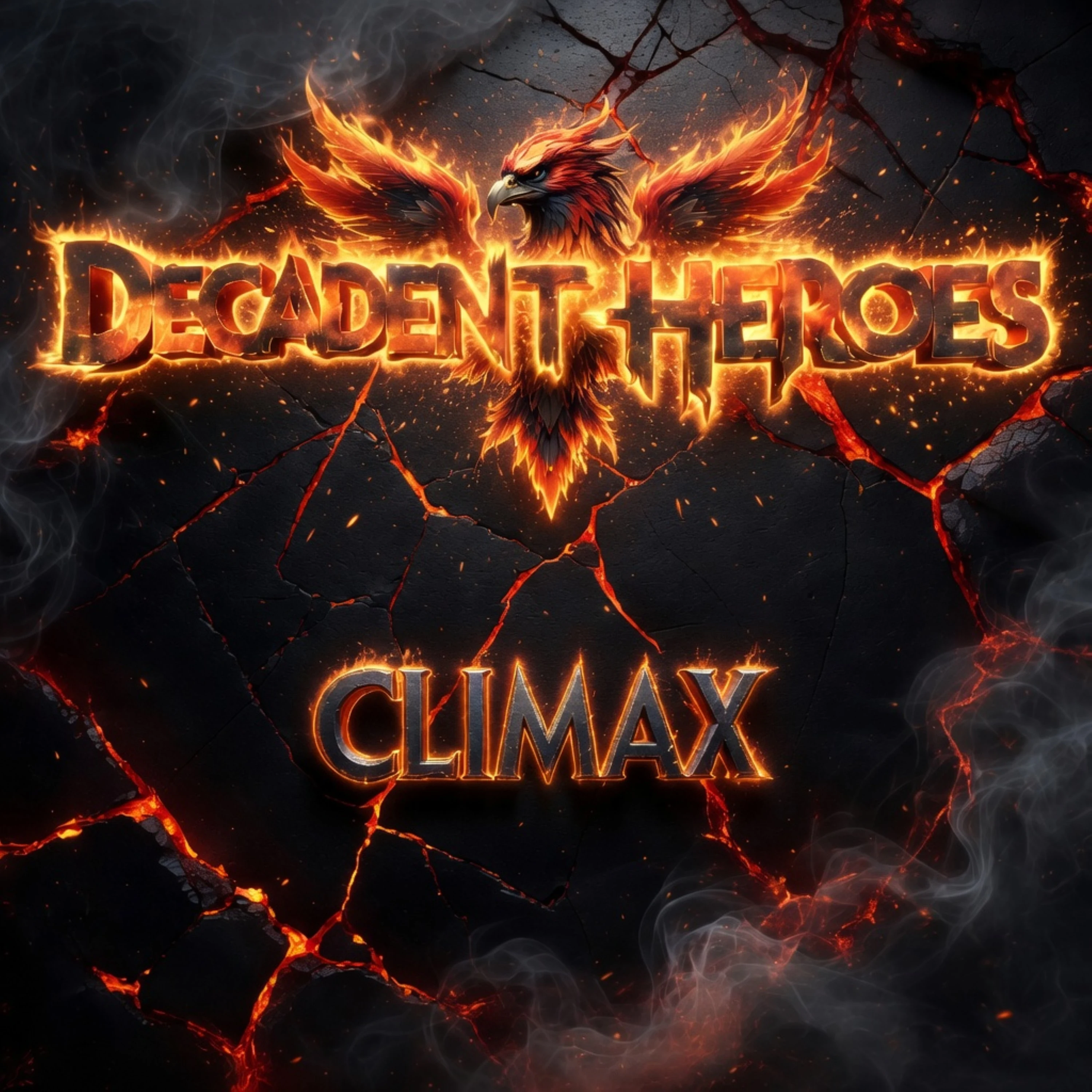
Pescara-based artist Luigi Chiappini has released his latest album, “Climax,” under his instrumental guitar project, Decadent Heroes. Decadent Heroes feels like a project created by someone who genuinely understands how instrumental rock should evoke emotions, not just technically. Luigi brings a very classic guitar-driven energy to the project while still keeping the music modern and immersive. The influence of artists like Joe Satriani, Andy Timmons, and Jeff Beck can be felt in the expressive phrasing and melodic style throughout the album. What works best is that the guitar never feels like it is showing off for attention; it actually feels like the main storytelling voice of the project. The production keeps everything warm and organic, giving the album a live-performance spirit.
“Decadent Heroes blend soaring guitar work with raw emotion in a way that feels timeless.”

“Climax” feels like one complete experience rather than a random collection of songs put together. The album genuinely feels like a complete move where every song unfolds like a scene, finally leading to a climax. The pacing of songs across the entire series is very well balanced, naturally moving between emotionally pouring moments and energetically charged sections. “The Dragon” opens the album with a dramatic and powerful energy that instantly sets the tone for what follows. Tracks like “Dawn of Fire” and “Pickup War” bring riffs and momentum while still holding onto the melodic side of the album. “Minutes Away” slows things down beautifully and lets atmosphere and emotion take over. Even without lyrics, the guitar phrasing communicates emotions clearly. “Before the Hype” and “Hype” feel intentionally connected, almost like two emotional perspectives existing side by side. “Enter the Mist” stands out for its immersive atmosphere and slow-building cinematic feel that quietly pulls you into its mood.

The arrangements across the album feel detailed but never overcrowded, which allows every instrument to breathe naturally. One thing I really enjoyed is how the album avoids unnecessary overplaying and focuses more on melody, pacing, and emotional flow. The alternate versions at the end are also surprisingly effective because they reveal different emotional textures hidden inside the original tracks. By the end, “Climax” genuinely earns its title since everything slowly builds toward a satisfying emotional payoff. It is cinematic, melodic, and emotionally engaging without trying too hard to prove itself.
We also got a chance to catch-up with the band. Here are some tangy insights for you to plug-in.
1. Your guitar has become your main storytelling tool over the years. What first pulled you toward instrumental music, and what keeps you inspired to create it today?
For over 25 years, I played in traditional rock bands with vocalists, which was a fantastic school.
However, I eventually reached a point where I felt the need for total creative freedom. I realized that the guitar didn’t have to just support a story told by lyrics because it could become the storyteller itself.
What pulled me in was the challenge of conveying complex and raw emotions directly through tone, vibrato, and phrasing, making the guitar my truest voice. Today, what keeps me inspired is the desire to keep music human. In an era dominated by AI and overprogrammed tracks, creating organic, guitar-driven instrumental rock feels more necessary and exciting than ever.
2. Climax feels incredibly cinematic from beginning to end. Did you always envision it as a complete journey, or did that idea emerge while writing the album?
The concept of a complete journey definitely emerged organically during the writing process. I don’t sit down trying to write film music, but my creative process is naturally synesthetic. When a melody or a heavy riff comes to me, it almost always brings vivid imagery and distinct atmospheres along with it.
As songs like “Minutes Away” and “Dawn of Fire” took shape, I realized they were pieces of a larger puzzle. The tracks started connecting with each other, forming a narrative arc that moves the listener through different emotional states from the first note to the last.
3. The album moves effortlessly between explosive rock moments and quieter, more atmospheric sections. How do you find the right balance between keeping the energy high and letting the music breathe?
Finding that balance is all about managing contrast and avoiding listener fatigue.
If you blast heavy riffs non-stop for forty minutes, the human ear gets used to the volume, and the music loses its impact. I look at the track list like a wave. The quieter, atmospheric sections are not just filler; they are necessary to create a sense of anticipation.
The right balance happens when the transition feels natural, making sure the quiet parts still maintain strong emotional tension. That way, when the heavy rock energy returns, it feels earned and hits with maximum intensity.
4. The title Climax suggests a destination or emotional payoff. What did that word mean to you while creating the album, and why did it feel like the perfect title?
Climax is a word that feels more perceptive than descriptive, and it felt perfect because it represents the arrival point of everything I have learned over twenty-five years of making music. It captures the exact moment when all the technical work, personal struggles, and sonic research finally came together.
For me, it is not just about reaching a random peak, but about finally unlocking my true musical identity and expressing it with no compromises.
5. With musicians like Dennis Holt, Pino Saracini, and Rich Gray contributing to the record, how did their presence shape the final sound and bring new dimensions to the music?
To really understand the impact these musicians had on the album, you just need to listen to one of my older singles, where I played every instrument myself, and then compare it to the album version. The music speaks for itself, and the massive jump in quality is undeniable.
Dennis Holt was absolutely fundamental in this process. Having a legendary drummer like him completely changed the foundation of the songs, giving them a real human push. When you have guys like Pino Saracini, Rich Gray, or Fausto Berardo locking in on bass, the meticulous craftsmanship of my solo work opens up to a broader conversation, bringing the energy of a true collective.
I also want to mention the vital contributions of Darrell Nutt and Francesco Coppola Bove on drums, Marcin Palider and Brian Barton on bass, and Artur Lenivenko on keyboards.
Every single one of them actively shaped the album’s sonic identity by bringing their own personal touch and character.
6. Looking ahead, what excites you most right now: taking these songs to the stage, working on new material, or exploring collaborations that might push Decadent Heroes in unexpected directions?
Right now, my absolute priority is driving the promotion for Climax and releasing a few more videos to let the world discover the record.
Looking ahead, taking my music to the stage is definitely an exciting thought, but I want to be realistic and flexible about it. A full-band performance of an album with this kind of production requires a complex setup that is hard to arrange in today’s live landscape.
Because of that, I am exploring different ways to bring the Decadent Heroes identity to the public, even in more intimate venues or alternative formats. At the same time, this creative momentum is far from over. The spark is still burning hot, and I am already deep into sketching out some very exciting, fresh ideas for the next record.
Catch the muse down below:
Discover more such similar tracks on our Rock Muse playlist:




Leave a Reply