
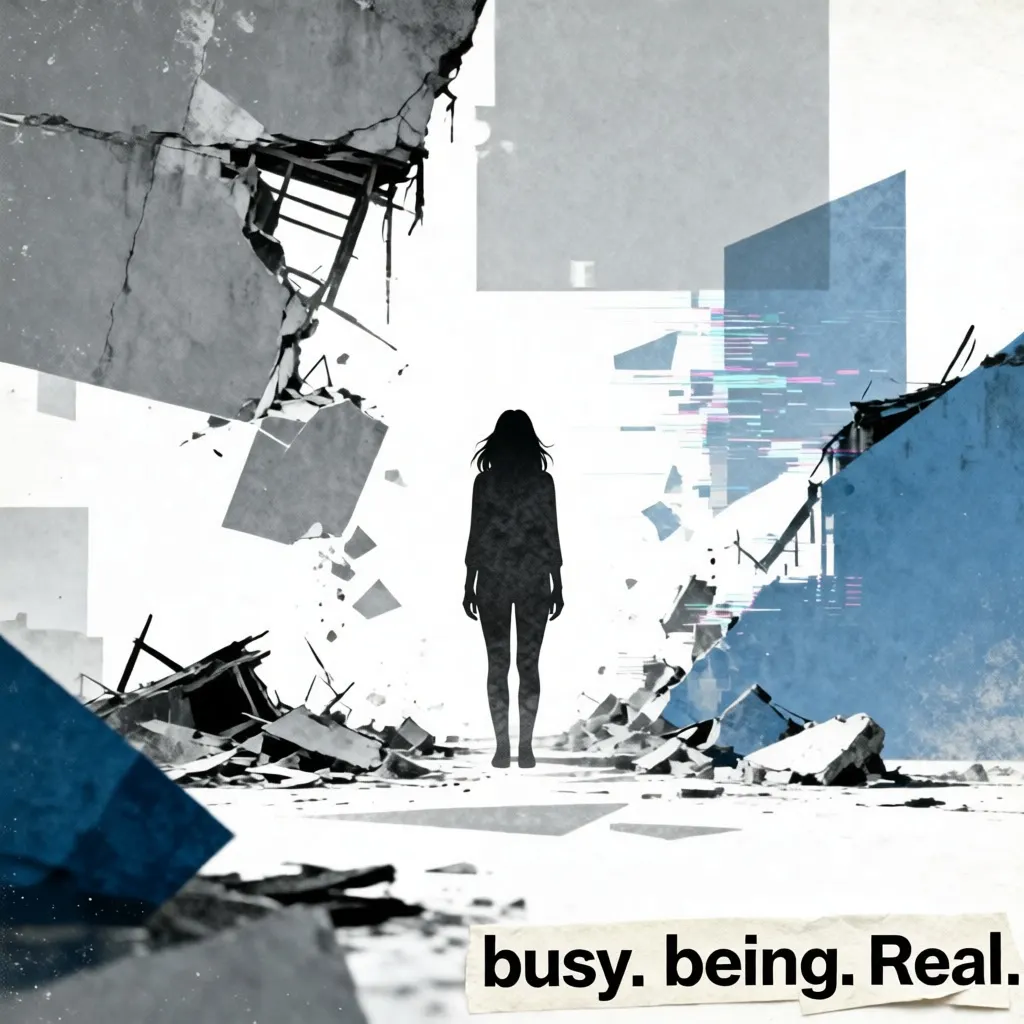

Garbage Garden is a unique musical project hailing from Kobe, Japan. This is a collective that accepts the rejected, not pity, but acceptance. Their unique melodies explore the alternative metalcore and digital psychedelic sound, making Garbage Garden stand apart from other musicians, embedding their memories in the listener’s mind. Their music is help for the helpless, not in a savior sense, but in the way a friend lends a helping hand to a fallen friend, to help them stand back up. Their latest single, “busy. being. Real.” had us stoked, and we want to share the experience with you.
“Garbage Garden showcases their musical prowess and creative genius with the release of their latest sonic masterpiece “busy. being. Real.”
I am a hard believer that sulking doesn’t get you anywhere, and the overall vibe of Garbage Garden resonates hard with me. This amazing project has found a way to acknowledge society’s pain while not making music that gives people the opportunity to sulk even more; instead, Garbage Garden empowers people to rise above their hardships, despite the unfairness of life. “busy. being. Real.” encourages people to be unapologetically themselves and own their realness. It is a musical revolution that is paving the way into a new genre for future musicians. Something as majestic as this is hard to explain in words, so go listen to “busy. being. Real.” now and find out what I am talking about.
We had a chance to have a conversation with the artist and here is how it went:
“busy. being. Real.” explores liberation from societal efficiency. What does “being real” mean to you personally in a world that constantly pushes productivity and optimization?
To me, “being real” means accepting how useful uselessness can actually be. In a world that treats us like cogs in a machine, the obsession with efficiency strips away our humanity. Realness lives in the glitches — those moments when the system just breaks down. Being sad, zoning out, or doing nothing aren’t wasted time; they’re reminders that we’re still human. Being real is choosing to stay unoptimized.
Your music embraces a “sad but not mournful” aesthetic, where heavy themes are wrapped in vibrant soundscapes. What draws you to this contrast, and what emotional response are you hoping to create in listeners?
I like to think of my music as a sugar-coated pill. The melody pulls you in, sweet and inviting, but once it melts on your tongue, the bitterness starts to spread. I want listeners to feel strangely alive — maybe even want to dance — while standing right inside the sadness.
The track is inspired in part by the “Lost Generation” in Japan, yet remains open-ended. How do you balance cultural specificity with a message that feels universally relatable?
The term “Lost Generation” originally comes from Ernest Hemingway’s work, referring to the post-WWI era. However, in the context of my music, it specifically refers to the Japanese “Lost Generation” (Rosu-Gene)—the cohort that faced extreme isolation and economic hardship during the country’s employment ice age. While the starting point is this specific Japanese context, the sense of isolation and lost opportunities they faced are pains that young people everywhere can relate to on a deep level. I leave the ending open because I want the music to speak to the “lost pieces” inside each listener’s own life, no matter where they are.
Around the 2-minute mark, there’s a noticeable shift in intensity that caused a certain energy shift within me. Was this moment designed as a turning point in the listener’s journey?
Exactly. That moment is when you stop just looking at the landscape and suddenly get pulled into it. It’s like a sudden gust of wind cutting through a quiet garden — it throws off your emotional balance. The idea is to break you out of “safe listening” mode and make you face the heart of the track directly.
Garbage Garden often references themes like memory, tragedy, and the tension between forgetting and remembering, including events like the Great East Japan Earthquake. How do you approach translating such heavy realities into a “playful yet sincere” sonic world?
I think the most respectful way to handle tragedy is not to freeze it as some untouchable monument, but to carry it with us into the present. I collect sounds like someone gathering dust or scraps of old memories. Those glitchy textures and playful synths feel like new sprouts pushing up through the ruins. It’s about remembering what happened, while still living on top of it.
Your sound feels almost hypnotic, revealing deeper layers over time. When creating, do you think of your music as something to be “experienced” repeatedly rather than understood in one listen?
I don’t want my music to be something you read once and throw away like yesterday’s newspaper. I want it to feel like a room where the light keeps changing depending on the time of day. At first you might notice the melody, then the textures start to stand out, and eventually the lyrics sink in. Instead of trying to “understand” it with your head, I hope people just stay inside the sound and find their own meaning through experience.
Catch A Muse Here:
Catch Similar Music in Our Pop Muse Playlist Here:

Leave a Reply