
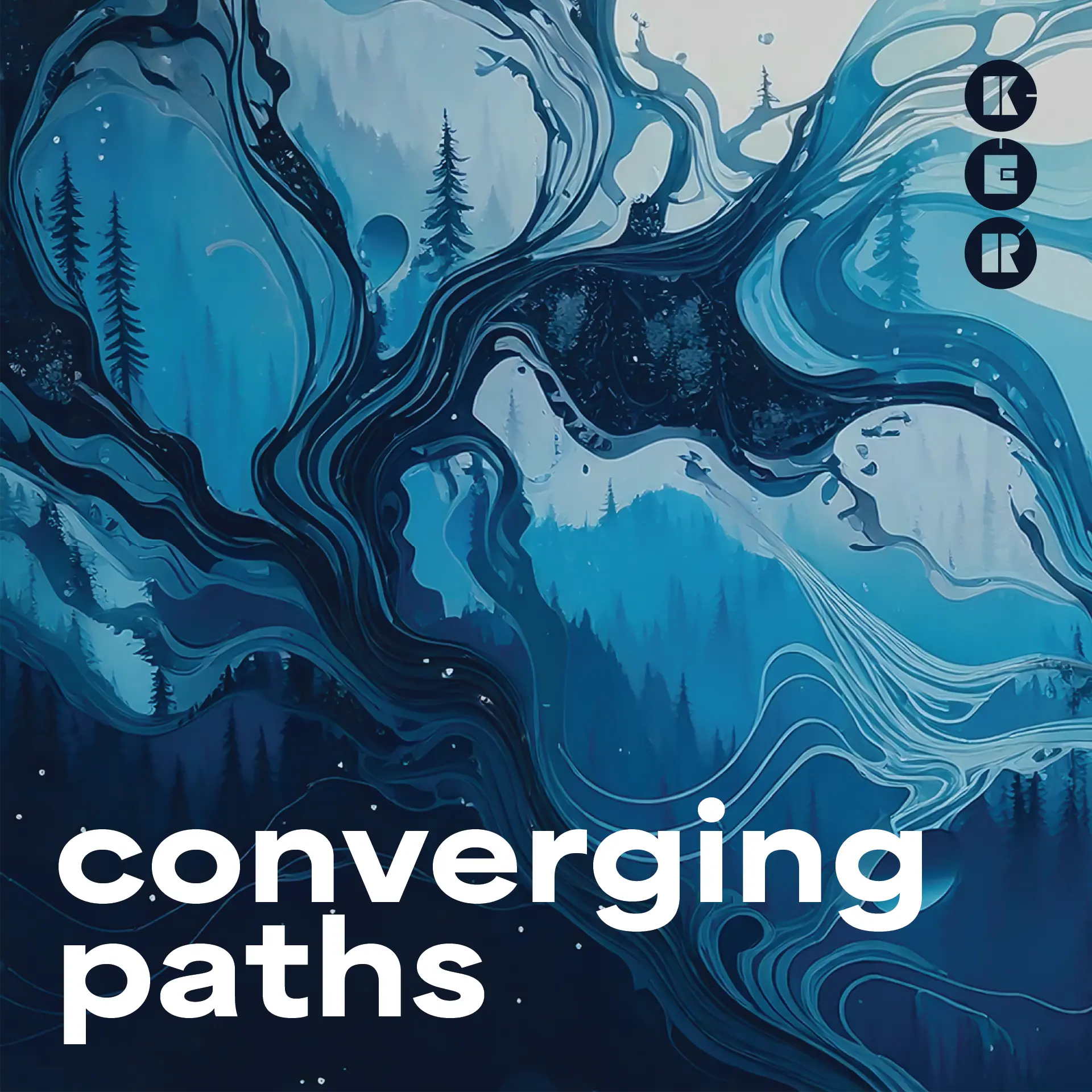

Born in Edinburgh, Scotland, Ker is a talented musician whose passion and love for music awakened after a visit to a music store in Kalispell, Montana. This curious singer, songwriter, and musician loves to learn from fellow musicians in a constant pursuit to hone his musical skills. His soothing voice brings a s sense of comfort and familiarity to the listeners, making him one of the impactful musicians in the scene. His latest single, “Wōndering on Giants”, is a song written for a local folk club in Scotland is also a part of his upcoming album “Converging Paths”.
“Wōndering on Giants” showcases the beauty of nature and music alike, where Ker brings a sense of peace, calm, and serenity to the listeners with captivating music and soulful vocals.”
While Ker wrote the lyrics, played rhythm and lead guitars, and sang in his latest single “Wōndering on Giants”, Pete Fairbairn is on the Keys and bass, Ross Mackenzie is on drums, and Andrew Entwistle did the production. Everyone involved in this project has done such a terrific job bringing this musical masterpiece to life. Ker’s voice carries so much emotion with it, leaving no other options for the listeners except to be fully invested in his world. With thoughtful music and intelligent songwriting, Ker has been able to relate life’s philosophical nature to the beauty of actual nature, and it is wonderful. Listen to this sonic phenomenon now!
We had a chance to have a little chat with the artist and here’s how it went-
Q1. Ker, Wōndering on Giants draws heavily on landscape and place, yet it avoids romanticised clichés of nature. How conscious was that restraint when writing the song, and what does the “existential” side of landscape mean to you as a songwriter?
I set out to write what would be a one-off ‘folk / rock‘ song that harnessed the interlocking forces of nature, man and time, and not rooted to any specific locale.
Q2. You came to music relatively later in life, after a career in international marketing and a formative encounter in Montana. How do you think that delayed entry into songwriting has shaped your discipline, themes, and resistance to self-indulgence?
I wanted to harness the accumulation of life’s experiences, expectations and reflections to find a creative ‘expression’, with equal weighting for melodies and words.
Q3. Your forthcoming album Converging Paths sits comfortably alongside influences from 1965–1977, yet it doesn’t feel retro or imitative. What do you think makes music from that era increasingly timeless rather than simply nostalgic?
I have tried to take the essence of what I enjoy best about the music yet introduce a more contemporary feel which might reach a new and / or younger audience who may not have hitherto been so ‘immersed’ in music.
Q4. There’s a strong sense that lyrics matter deeply in your work, almost as much as melody and arrangement. When you’re writing, what tends to come first: the emotional idea, the words, or the musical structure that will carry them?
I start with what I hope to be an original idea, work in a title that is relevant yet ‘arresting’, and to attempt to develop ‘feeling’ within the tone and rhythm. I also try to have some sort of ‘conclusion’ at the end of the songs to make the lyrics engaging.
Q5. You’ve spoken about music as offering a kind of “casual emotional retreat.” In an era of constant noise and distraction, what do you hope a listener feels, or perhaps does differently, after spending time with one of your songs?
It is an attempt to recreate the feeling that I had for some of the music that inspired and carried me through life.
Catch A Muse Here:
Also Checkout Ker’s “Lofty Thoughts” Here:
Catch Similar Music in Our Fresh Finds Playlist Here:

Leave a Reply